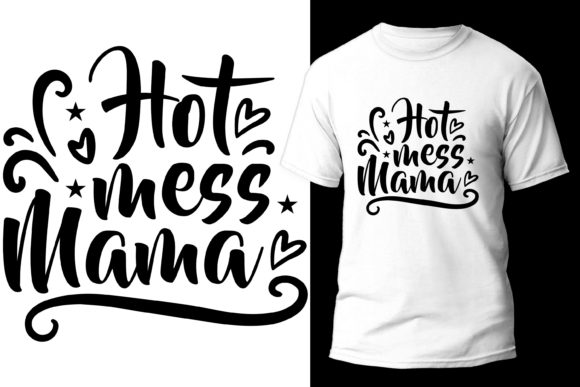
Hot Mess Mama Design: A Designer’s Real-World Review
As a designer who spends half my life staring at stitch maps and the other half troubleshooting thread breaks, I have learned to be skeptical of trendy graphics. We see thousands of files claiming to be "ready for production," but few survive the transition from screen to fabric without losing their soul. When I first pulled up the Hot Mess Mama Funny T-Shirt Design, I wasn’t looking for hype. I was looking for viability. Could this actually work on a real garment? Would it hold up in a commercial embroidery setting, or is it just another digital asset that looks good on a white background but fails under the needle?
The initial impression is one of relatable chaos, which is exactly the point. The mood is playful, slightly self-deprecating, and undeniably modern. For those of us in the craft business, we know that humor sells. But humor only sells if the execution is clean. The layout of this design feels balanced, with a visual personality that leans into the "organized chaos" aesthetic many parents and busy professionals resonate with. It doesn’t try too hard. It sits comfortably in the category of T-Shirt Designs that prioritize message over intricate detail, which is often a blessing for embroidery digitizers.
From Screen to Stitch: Evaluating Practical Use
The product description notes that these designs are made for screen printing and digital DTG printing, with an element size no larger than 12 inches on a 12 x 18 artboard. This is a crucial detail for us as embroidery specialists. While the source file is vector-based or high-resolution raster intended for print, translating this into a machine embroidery design requires careful consideration. The fact that the artboard is scalable without losing quality is a significant advantage. It means we can resize the core elements to fit various hoop sizes without worrying about pixelation or blurry edges during the digitizing process.
I recently tested a similar concept on a custom embroidered tote bag for a local boutique client. The goal was to create a handmade product that felt premium yet approachable. Using the Hot Mess Mama Funny T-Shirt Design as a base, I had to make some strategic decisions. Since the original is optimized for print, I couldn't just auto-digitize it. I had to manually assign stitch types. The bold lines translated beautifully into satin stitches, providing that crisp, raised look customers love. However, any shaded areas or complex gradients in the original Graphics needed to be simplified into solid fill stitches or removed entirely to prevent excessive stitch density.
Where This Design Shines in Real Projects
This design is not a one-trick pony. While it screams "t-shirt," its versatility extends far beyond basic apparel. Here is where I see it performing best in real-life embroidery situations:
- Sweatshirt Embroidery: The thicker fabric of a hoodie or crewneck provides a stable foundation for the bolder elements of the design. It adds a tactile quality that print cannot match.
- Tote Bag Design: Canvas bags are sturdy and handle higher stitch counts well. This design makes for a perfect personalized gift for teachers, moms, or anyone who appreciates a laugh.
- Embroidered Patch: By adding a merrowed edge and using a stiff stabilizer, this design can become a standalone patch. This opens up revenue streams for Etsy sellers who want to offer iron-on accessories rather than full garments.
- Aprons and Kitchen Towels: For a more niche market, placing this on a bib apron creates a fun, functional item for home cooks who don’t take themselves too seriously.
The key to success here is understanding your audience. A small shop product like this thrives on connection. When a customer sees this stitched onto a high-quality blank, they aren't just buying a shirt; they are buying into an identity. It builds brand consistency for shops that focus on lifestyle and humor.
Navigating the Technical Challenges
However, we must be realistic. Not every fabric is created equal, and not every placement is safe. There are specific scenarios where you need to exercise caution with this type of graphic.
First, consider hoop size. If you are working with a 4x4 hoop, you will likely need to split the design or significantly reduce it, which could compromise the legibility of any text elements. Tiny lettering is the enemy of embroidery. If the original design has small taglines or intricate details, they may turn into a blob of thread if not carefully edited. Always inspect small details before finalizing your digitizing.
Second, think about fabric texture and stretch. On thin or stretchy fabrics like tri-blend t-shirts, heavy fill stitches can cause puckering. You must use the proper stabilizer—likely a cut-away for durability—and test the stitch density. Dense stitch areas can weigh down lightweight garments, altering the drape and comfort. For curved surfaces like caps, the design needs to be warped correctly to avoid distortion. A flat design on a curved crown will look amateurish if not adjusted for the geometry of the hat.
Dark fabrics present another challenge. If the design relies on light colors, you may need to add an underlay or use a backing material to prevent the garment color from showing through. Thread color contrast is vital here. Test your design in black and white mockups first to ensure the shapes remain distinct even without color differentiation.
Commercial Viability and Professional Notes
For commercial embroidery projects, professionalism is paramount. A sloppy stitch-out damages trust. Before listing this as a digital embroidery file or selling finished items, you must verify the licensing. The description mentions it is for screen printing and DTG, but it does not explicitly state embroidery rights. As a responsible craft business owner, you must confirm whether you have the right to modify and sell this as an embroidered product. Never assume. Check the license terms directly with the creator.
Additionally, always test the design on scrap fabric first. Do not risk your client's expensive garment on an untested file. Check how the thread colors interact with the fabric. Does the red bleed into the white? Is the black dense enough to cover the navy blue shirt? These are the questions that separate hobbyists from professionals.
In terms of visual appeal, this design has high potential for buyer engagement. It is recognizable, shareable, and fits perfectly into the current trend of authentic, imperfect parenting and lifestyle branding. Whether you are creating holiday embroidery gifts or everyday custom apparel, the Hot Mess Mama Funny T-Shirt Design offers a solid foundation. Just remember: the file is the starting point, not the finish line. Your skill in digitizing, stabilizing, and stitching is what turns a graphic into a valuable finished product.
Ultimately, this design is a tool. Like any good tool, its value depends on the hand that wields it. Treat it with respect, understand its limitations, and it will serve your embroidery project well. Keep your needles sharp, your tension checked, and your creativity flowing.