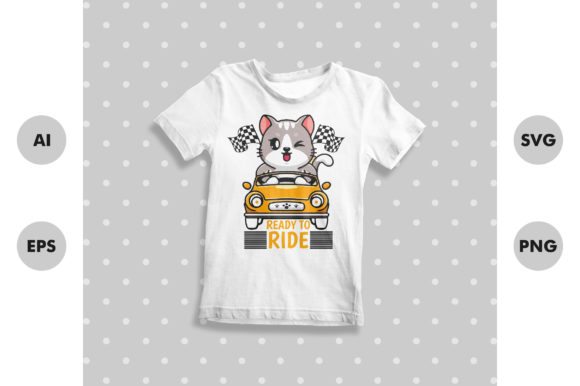
Review: Kids Car Funny T-shirt SVG File Design
As a designer who spends half my life digitizing and the other half stitching, I have learned to look past the glossy preview images. When I downloaded the Kids Car Funny T-shirt SVG File Design, my immediate goal was not just to admire the artwork but to determine if it could survive the rigors of real-world embroidery. We often forget that a vector graphic on a screen behaves very differently once it is translated into thread on fabric. This review breaks down how this specific design performs when moved from digital asset to tangible handmade product.
First Impressions and Visual Personality
The first thing that strikes you about this design is its playful simplicity. The theme is instantly recognizable, tapping into that universal childhood fascination with vehicles. However, from a technical standpoint, the mood is light and approachable. The layout avoids unnecessary clutter, which is a blessing for embroidery. Complex backgrounds or overly intricate details often turn into a muddy mess of thread breaks and puckering. This design, described as being made with 100 vector shapes, suggests a clean structure that should translate well into stitch paths.
The "funny" aspect implies a whimsical character or expression within the car motif. In embroidery, personality comes through in the curve of a line or the weight of a satin stitch. If the original vector has smooth curves, the final stitched result will look professional. Jagged or poorly optimized vectors, however, can cause the machine to stutter. Since this file is available in AI, EPS, and SVG formats, it offers the flexibility needed to inspect these curves before committing to the hoop.
Real-World Application: The Custom Sweatshirt Test
To truly evaluate the Kids Car Funny T-shirt SVG File Design, I imagined a common scenario for many Etsy sellers and craft business owners: a custom order for a toddler’s birthday gift. The client wanted a personalized sweatshirt. This is where the rubber meets the road, quite literally.
Sweatshirts present a unique challenge due to their texture and stretch. A design that looks crisp on a flat mockup can get lost in the fleece. Because this design is vector-based and allows for easy color changes, I could adapt the thread colors to ensure high contrast against a heather gray fabric. I opted for bright primary colors for the car body to make the embroidery project pop. The simplicity of the shape meant that even on a textured surface, the silhouette remained clear. It did not require excessive stitch density to convey the image, which is crucial for keeping the garment soft and wearable for a child.
Versatility Across Product Lines
Beyond apparel, this graphic holds significant potential for various T-Shirt Designs and hard goods. For small shop product lines, versatility is key to maximizing ROI on a single digital embroidery file. Here is how this design performs across different mediums:
- Tote Bag Design: On canvas, the design benefits from the stable weave. A fill stitch approach works well here, creating a bold, durable statement piece.
- Embroidered Patch: This is perhaps the best use case. Patches allow for higher stitch density without worrying about fabric puckering. The car motif makes for an adorable iron-on accessory for backpacks or jackets.
- Baby Embroidery: For onesies or bibs, scale is everything. The vector nature of the file means you can resize it down without losing quality. However, you must ensure the smallest details are not so tiny that they become unrecognizable after stitching.
- Holiday Embroidery: With minor tweaks, such as adding a Santa hat via vector editing, this car becomes a seasonal bestseller. The base design is neutral enough to be themed easily.
Technical Considerations and Stitching Strategy
While the design is user-friendly, it is not without its technical demands. As an experienced reviewer, I must point out areas where caution is needed. The description notes it is made with 100 vector shapes. In embroidery terms, this could mean multiple color stops or distinct object layers. Before loading this into your machine, you need to decide if you want to stitch it as a multi-color design or simplify it.
If you are using this for commercial embroidery, time is money. Too many color changes can slow down production. I recommend testing the design on scrap fabric first to see how the transitions look. Additionally, check the thread colors against your inventory. The ability to easily change colors is a major plus, allowing you to match specific brand palettes or customer requests.
For curved surfaces like caps, this design requires careful placement. The center of the cap is the safest zone. Avoid placing the car too close to the edge where the hoop might distort the shape. Also, consider the stabilizer. For stretchy fabrics like t-shirts, a cut-away stabilizer is non-negotiable to prevent distortion after washing. For woven fabrics like aprons or pillow covers, a tear-away might suffice, but always test first.
Visual Appeal and Brand Consistency
In the world of personalized gift markets, visual appeal drives sales. This design scores high on "giftability." It is cute without being overly saccharine, making it appealing to parents who want something stylish yet fun. When used consistently across a product line, such as matching sibling shirts or family pajamas, it builds brand consistency.
However, professionalism lies in the finish. A poorly stitched version of this design can look amateurish. Ensure that your running stitch underlays are sufficient to anchor the design, especially if you are using lighter weight fabrics. The clarity of the final finished product depends heavily on your machine tension and needle choice. A ballpoint needle is essential for knits to avoid snagging.
Practical Designer Notes
Before you list this as a small shop product or use it for a client, keep these practical tips in mind:
- Check Licensing: The product description mentions AI, EPS, SVG, and PNG files. Confirm whether the license allows for commercial use of the finished product. Most designers allow selling physical items but restrict reselling the digital file itself.
- Mockup Testing: Use the PNG file to create printable mockup previews for your online store. Show the design on both light and dark backgrounds to help customers visualize the contrast.
- Detail Inspection: Zoom in on the vector file. Are there any stray points or overlapping shapes? Clean up the file in your vector software before converting it to an embroidery format if necessary.
- Fabric Texture: Remember that fabric texture affects perception. A design that looks sharp on cotton may look softer on fleece. Adjust your expectations and marketing images accordingly.
In conclusion, the Kids Car Funny T-shirt SVG File Design is a solid addition to any designer’s library. It balances charm with technical feasibility. While it requires standard embroidery precautions regarding stabilizers and fabric types, its vector foundation provides the flexibility needed for diverse applications. Whether you are creating a custom apparel line or a one-off holiday embroidery gift, this design offers a reliable starting point for creative expression. Just remember to respect the material limits of your chosen substrate, and let the simplicity of the design shine through the quality of your stitching.