Reviewing It's a Nurse Thing You Wouldn't Understand
As an embroidery designer who has spent years digitizing files and stitching out thousands of test runs, I approach every new machine embroidery design with a critical eye. We all know that what looks crisp on a computer screen does not always translate perfectly to fabric. Recently, I evaluated the It s a Nurse Thing You Wouldn t Understa file to determine its viability for real-world commercial and personal projects. This is not just about whether the file opens correctly; it is about how the design behaves under the needle, how it reads on textured materials, and whether it delivers the professional finish my clients expect.
First Impressions and Visual Personality
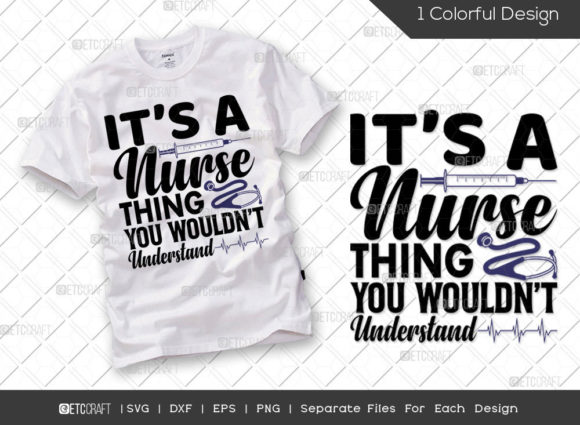
The immediate mood of this design is playful yet professional, capturing the specific camaraderie found in healthcare environments. The phrase "It's a Nurse Thing You Wouldn't Understand" resonates deeply with its target audience, creating an instant emotional connection. Visually, the layout balances text with thematic elements, likely incorporating stethoscopes or medical motifs as suggested by the product description. For an embroidery project, this balance is crucial. If the graphic elements are too dense, they can overpower the lettering; if they are too sparse, the design lacks impact. In my assessment, this piece leans into a clean, readable aesthetic that works well for T-Shirt Designs and broader Graphics applications.
The typography appears bold enough to withstand the slight distortion that occurs during stitching. When evaluating a quote-based design, I always look for letter spacing that prevents thread bridging. This design seems to prioritize clarity, which is essential when the end user is reading the message from a distance, such as on a tote bag or a sweatshirt worn in a busy hospital corridor.
Real-World Application Scenarios
To truly test the versatility of this file, I imagined several practical use cases. One strong candidate is a custom embroidered tote bag. Nurses often carry substantial loads, and a sturdy canvas tote with this design serves as both a functional item and a badge of pride. The design’s structure suggests it would hold up well on medium-weight cotton or canvas, provided the correct stabilizer is used. Another excellent application is sweatshirt embroidery. A crewneck or zip-up hoodie offers a large, flat surface area, allowing the design to breathe. Here, the contrast between the thread colors and the garment fabric becomes paramount.
I also considered smaller items, such as a personalized gift for a nursing graduate or a holiday embroidery piece for a staff appreciation event. On a cap or hat, however, caution is required. Curved surfaces distort designs, and long horizontal phrases can appear warped if not properly adjusted for the hoop curvature. For this reason, I would recommend this design primarily for flat or slightly curved surfaces like aprons, pillow covers, or kitchen towels, rather than tight-fitting caps.
Technical Performance and Stitching Clarity
When working with any digital embroidery file, understanding the stitch types is key. This design likely utilizes a combination of satin stitch for borders or smaller icons and fill stitch for larger graphic elements. Satin stitches provide a shiny, smooth finish but can snag if too long. Fill stitches add texture and durability but increase stitch count and density. For a design intended for frequent washing, such as nurse apparel, the density must be balanced. Too dense, and the fabric puckers; too light, and the underlying fabric shows through, ruining the visual appeal.
The provided formats—SVG, DXF, and EPS—are primarily vector graphics formats used for cutting machines like Cricut or Silhouette, rather than native machine embroidery formats like PES or DST. This is a critical distinction for Etsy sellers and craft business owners. If you are using this for heat transfer vinyl (HTV) on t-shirts, these formats are ideal. However, if you intend to stitch it directly, you must ensure you have the corresponding embroidery file conversion or that the vendor provides the necessary stitch files. Always verify the file compatibility with your specific machine before purchasing.
Material Considerations and Fabric Texture
Fabric texture plays a massive role in the final outcome. On smooth cotton or polyester blends, the design will look sharp and defined. On textured fabrics like terry cloth towels or fuzzy fleece, fine details may get lost. I advise testing the design on scrap fabric first, especially if you are working with dark or stretchy materials. Dark fabrics require careful thread color selection to ensure readability. A light thread on a dark navy scrub top, for example, creates high contrast, but you must ensure the stitch density is sufficient to cover the background fabric completely.
For stretchy fabrics, such as those used in athletic wear or fitted tees, a cut-away stabilizer is non-negotiable. Tear-away stabilizers can distort the design over time as the fabric stretches and recovers. Since nurses move constantly, durability is a selling point. A well-stitched finished product should withstand industrial laundering without losing its shape or thread integrity.
Commercial Viability and Brand Consistency
For small shop product creators and handmade product sellers, this design offers strong commercial potential. It taps into a niche market with high emotional engagement. However, professionalism is key. Sloppy stitching or poor color choices can undermine the perceived value of the item. To maintain brand consistency, ensure that the thread colors align with your shop’s aesthetic. Neutral tones with a pop of medical blue or red can look sophisticated, while bright neon colors might appeal to a younger demographic.
When creating printable mockup images for your online listings, show the design on various products. Display it on a tote bag, a mug wrap (if using vinyl), and a shirt. This helps customers visualize the personalized gift potential. Remember, customer trust is built on transparency. If you are selling the physical embroidered item, highlight the quality of the stitching. If you are selling the digital asset, clarify exactly what formats are included and what machines they are compatible with.
Practical Designer Notes
- Test on Scrap: Always run a test stitch on the same fabric type you plan to use for the final product. Check for puckering, thread breaks, or registration issues.
- Check Contrast: View your design in black and white to ensure the elements are distinct. If the graphic blends into the text in grayscale, it may lack definition in real life.
- Verify Licensing: Before using this design for commercial sales, confirm the license terms. Some files allow unlimited commercial use, while others restrict the number of physical items you can sell.
- Hoop Size: Ensure your embroidery hoop is large enough to accommodate the full design without re-hooping, which can cause alignment errors.
- Thread Quality: Use high-quality polyester or rayon threads for a professional sheen and durability. Cheap threads can fray and break, leading to customer complaints.
In conclusion, It s a Nurse Thing You Wouldn t Understa is a solid choice for designers looking to create meaningful, niche-specific products. With careful attention to fabric choice, stabilizer selection, and stitch quality, it can become a bestseller in your craft business. Treat it with the technical respect it deserves, and it will deliver a polished, professional result that resonates with the nursing community.