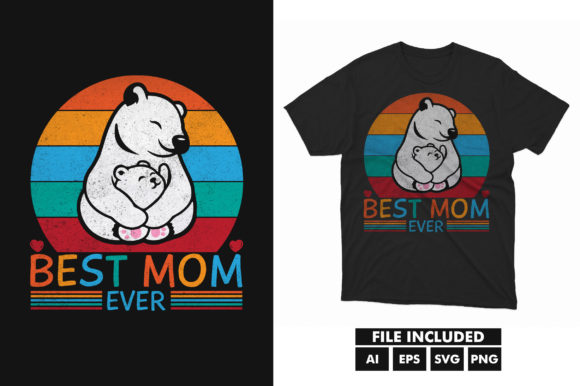
Reviewing the Best Mom Ever Panda Design
As a designer who spends more time staring at stitch maps than actual fabric, I have learned that not every cute graphic translates well to thread. When I first pulled up the Best Mom Ever Panda Kids Funny T-shirt design files, my initial reaction was one of cautious optimism. The concept is undeniably charming—pandas are perennial favorites in the nursery and gift markets—but the execution determines whether this becomes a bestseller or a bin of unpicked mistakes. This review breaks down how this specific set of T-Shirt Designs performs when moved from the screen to the hoop.
First Impressions and Visual Personality
The mood of this design is playful and affectionate, targeting the lucrative market of personalized gifts for mothers. Visually, the panda motif relies on bold shapes rather than intricate shading, which is generally a good sign for embroidery. Complex gradients often turn into muddy messes under the needle, but high-contrast black and white elements tend to pop. The layout suggests a central focal point with supporting text, a classic structure for custom apparel. However, because the source files include AI, EPS, SVG, and PNG formats, it is clear these are primarily vector-based Graphics intended for flexibility. For an embroiderer, this means you likely need to digitize the design yourself or ensure your software can convert these vectors into a viable machine embroidery design without losing structural integrity.
Real-World Application: The Custom Sweatshirt Test
To truly evaluate the Best Mom Ever Panda Kids Funny T-shirt asset, I imagined a real-life scenario: a client ordering a matching set for a toddler and a mother for Mother’s Day. The natural choice here is a soft, heather-grey sweatshirt for mom and a bright white tee for the child. On the adult garment, the design needs to hold its own against the textured fleece. If the stitch density is too low, the fabric grain will show through the black fills, making the panda look sparse. If the density is too high, the sweatshirt will pucker and become stiff.
This is where the "easy to change colors" feature mentioned in the file description becomes critical. In a craft business, you cannot offer just one colorway. Being able to swap the thread colors quickly allows you to adapt the design for dark navy hoodies or pastel baby onesies. A successful embroidery project relies on this adaptability. For the child’s item, the scale must be reduced. This brings us to a crucial technical consideration: legibility at small sizes.
Navigating Technical Constraints and Fabric Choices
While the design is labeled for T-shirts, its versatility extends to tote bag design applications and even embroidered patch creation. However, caution is required. If you plan to use this on a curved surface like a cap, the width of the panda’s face might cause distortion unless properly stabilized. For baby embroidery, comfort is paramount. A dense fill stitch background can feel scratchy against sensitive skin. In such cases, consider using an applique design technique where the panda shape is cut from felt or cotton and stitched down with a satin border, rather than filling the entire shape with thread.
Textured fabrics pose another challenge. If you are stitching this onto a waffle-knit towel or a corduroy apron, the fine details of the panda’s eyes or the lettering may get lost in the fabric pile. Always test the design on scrap fabric first. Check the stitch density and adjust your underlay stitches accordingly. For stretchy fabrics like jersey tees, a cut-away stabilizer is non-negotiable to prevent the design from warping after washing. Without proper stabilization, even the best digital file will result in a distorted finished product.
Commercial Viability for Etsy Sellers and Makers
For Etsy sellers and small shop owners, the value of this asset lies in its commercial potential. The "funny" aspect of the title suggests a lighthearted tone that resonates well on social media. A well-executed printable mockup showing this design on a variety of products can significantly boost buyer engagement. However, since the package provides vector files (AI, EPS, SVG) and raster images (PNG), it is vital to confirm the licensing terms before selling digital embroidery file conversions or finished items. Most vector bundles allow for physical product sales, but reselling the digital files themselves is often prohibited.
When creating design assets for your portfolio, ensure that the conversion from vector to stitch maintains the clean lines of the original graphic. Poor digitizing can introduce jagged edges or unnecessary travel stitches. A professional handmade product must look polished from the back as well as the front. Trim your jumps and secure your threads. Customers judge quality by the neatness of the reverse side, especially on items like kitchen towel sets or pillow covers where the back might be visible.
Practical Designer Notes for Best Results
Before committing to a full production run, follow these practical steps to ensure the Best Mom Ever Panda Kids Funny T-shirt design meets professional standards:
- Test on Scrap Fabric: Always stitch out a sample on the exact fabric type you intend to use. This reveals issues with tension and density.
- Check Thread Contrast: Ensure the black thread stands out sharply against the background. On dark fabrics, consider adding a white underlay or changing the panda to a lighter color.
- Inspect Small Details: Zoom in on the vector file. Are the eyes too small to stitch? You may need to simplify tiny elements or merge them into larger shapes.
- Verify Hoop Size: Confirm that the design fits within your machine’s maximum hoop size, especially if you plan to enlarge it for a sweatshirt embroidery project.
- Mockup in Black and White: Remove color to check the value structure. If the design looks flat in grayscale, it may lack depth in thread.
- Confirm Licensing: Read the included license file carefully. Understand the difference between personal use and commercial rights for commercial embroidery projects.
In conclusion, this design offers a solid foundation for a variety of personalized gift ideas. Its strength lies in its simplicity and emotional appeal. However, its success depends entirely on the skill of the digitizer and the preparatory work of the embroiderer. By respecting the limitations of fabric and thread, and by leveraging the flexibility of the provided vector files, you can transform this simple graphic into a high-value small shop product. Whether used for holiday embroidery gifts or year-round boutique branding, the key is attention to detail. Treat the digital file as a blueprint, not a final answer, and your custom apparel will reflect the professionalism your customers expect.