Reviewing the Sorry Funny T-shirt Design for Real Embroidery
As a designer who has spent countless hours digitizing patterns and testing them on various fabrics, I approach every new machine embroidery design with a mix of curiosity and caution. We have all been there: you download a file that looks perfect in the preview, only to find it turns into a tangled mess of thread on your favorite hoodie. Today, I am taking a close look at the Sorry Funny T-shirt Design. This is not just a quick glance at the thumbnail; this is an evaluation of how this asset holds up when translated from a digital concept into a tangible, stitched reality.
First Impressions and Visual Personality
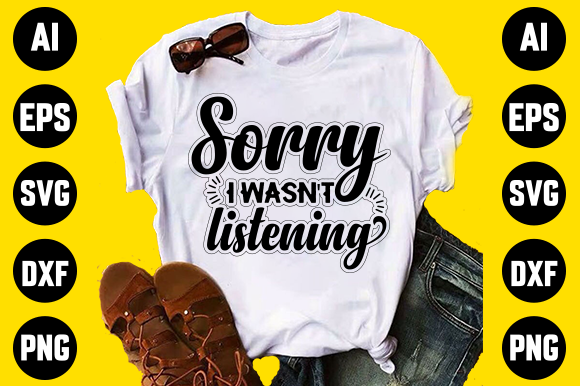
The first thing that strikes me about the Sorry Funny T-shirt Design is its attitude. It carries a mood that is casual, slightly irreverent, and undeniably modern. In the world of custom apparel, humor sells, but it has to be legible. The layout appears balanced, avoiding the clutter that often plagues novelty graphics. For an embroidery project, clarity is king. If the text or graphical elements are too dense, the machine struggles, and the final product looks muddy.
This design feels like it belongs on everyday wearables. It is not trying to be high-fashion couture; it is aiming for relatable comfort. When I visualize this on a sweatshirt embroidery project, I can immediately see the appeal. It fits the current trend of minimalist yet expressive streetwear. However, as a reviewer, I need to look past the vibe and into the mechanics. How will those curves stitch out? Will the small details hold up after a wash cycle? These are the questions that separate a hobbyist mistake from a professional handmade product.
Real-World Application Scenarios
Let us talk about where this design actually works. I recently worked on a batch of custom tote bags for a local boutique, and a design like this would have been ideal. The tote bag design market is saturated, but unique, witty graphics always stand out. Imagine this stitched onto a heavy canvas bag using a contrasting thread colors scheme. The durability of the stitch combined with the humorous message creates a piece that customers want to use daily, not just hang on a wall.
Beyond bags, consider baby embroidery or kids' apparel. Parents love playful designs that express personality without being overly complex. A soft onesie or a toddler’s tee featuring this design could be a hit for personalized gift shops. The key here is scale. On smaller items, you must ensure the design does not overwhelm the garment. For larger pieces like aprons or pillow covers, you have more room to let the design breathe, allowing the fill stitch areas to showcase the texture of the thread.
For Etsy seller accounts and small shop owners, versatility is crucial. This design could easily be adapted for embroidered patch creation. Patches are a low-risk, high-reward product because they do not require fitting the design to a curved surface like a cap or a structured garment. You can stitch them out on stable fabric, cut them, and sell them as add-ons to other products. This increases the average order value for any craft business.
Technical Considerations and Stitching Challenges
Now, let us get into the technical nitty-gritty. The product description states that this is an INSTANT DOWNLOAD containing a ZIP folder with DXF, SVG, Transparent PNG, EPS, and Ai files, all at 300dpi. Here is where I must pause and offer a critical piece of advice. While these formats are excellent for Print Templates and general Graphics, they are not native machine embroidery formats like PES, DST, or JEF.
If you are an embroiderer, you cannot plug an SVG or AI file directly into most home embroidery machines. You will likely need to use digitizing software to convert these vector or image files into a stitch file, or use a service that converts them. This is a vital distinction. If you are not a digitizer, you must check if the seller provides actual embroidery files. If they do not, you are looking at a design meant for print-on-demand or sublimation, which requires a different workflow. Assuming you have the tools to convert or digitize from these sources, pay attention to the stitch density. Vector files often have sharp corners that translate poorly to thread unless you add underlay stitches and adjust the pull compensation.
When working with textured fabrics, such as terry cloth towels or fuzzy fleece, the stabilizer choice becomes critical. A design with fine lines or small lettering can sink into plush fabrics. I recommend using a cut-away stabilizer for garments that will be washed frequently, as it provides long-term support. For woven fabrics like cotton tees, a tear-away might suffice, but test it first. Always run a test stitch on a scrap piece of the same fabric. Check for puckering, thread breaks, and registration issues.
Navigating Fabric and Hoop Constraints
Placement matters. If you are applying this to a cap or hat, remember that the surface is curved and unstable. You need a strong stabilizer and possibly a topping to keep the stitches from sinking into the twill. For dark fabrics, consider using a lighter thread color to make the design pop, or add a satin stitch border to define the edges. On stretchy fabrics like jersey knits, avoid large areas of dense fill stitch without proper stabilization, as the fabric may distort during stitching.
Also, consider the hoop size. The file size is listed as 15, but units are not specified. Is it 15 inches? 15 centimeters? You must verify the dimensions before purchasing. If the design is too large for your standard hoop, you will need to split it or use a larger machine. For small hoop sizes, you might need to simplify the design or remove intricate details that the machine cannot physically execute at that scale.
Commercial Viability and Brand Trust
From a business perspective, using a design like the Sorry Funny T-shirt Design can enhance your brand’s personality. It shows that you are in touch with current trends and willing to offer fun, engaging products. However, professionalism lies in the execution. A sloppy stitch-out damages trust. Ensure your tension is correct, your needles are fresh, and your thread quality is high. Customers may forgive a simple design, but they will not forgive poor craftsmanship.
Before listing this as a small shop product or including it in your design assets portfolio, confirm the licensing terms. Can you sell finished items made with this design? Are there restrictions on the number of units? Since the provided description mentions "commercial embroidery" contexts implicitly through the file types, always double-check the specific license agreement included in the download. Protecting your business from copyright issues is just as important as protecting your thread from breaking.
In conclusion, the Sorry Funny T-shirt Design offers a solid foundation for creative projects, provided you understand the technical bridge between graphic files and embroidery execution. It is a versatile asset for holiday embroidery, everyday wear, and unique gifts. Treat it with the respect it deserves by testing, stabilizing, and refining your process. Your customers will appreciate the effort, and your portfolio will reflect the quality of a true professional.